What Is a 316L Stainless Steel Label? Where Is It Used?
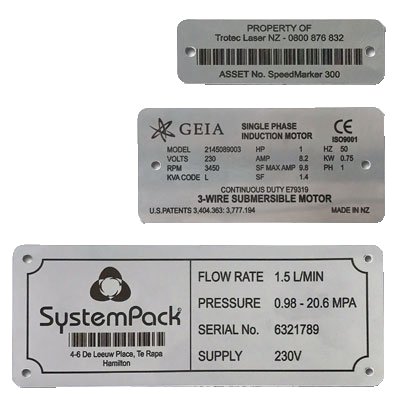
When people say "stainless steel label," the grade that usually comes to mind is 304; however, for more demanding environments, the alloy actually preferred by industry is 316L. The difference may not be visible to the eye, but it directly determines the label's lifespan.
The Key Difference Between 304 and 316L
Thanks to the approximately 2-3% molybdenum added to its composition, 316L stainless steel is significantly more resistant to chloride ions (salt) than 304 grade. While 304 steel performs well under normal atmospheric conditions and indoors, surfaces continuously exposed to salty sea air, chlorinated cleaning chemicals or acidic vapors can develop pitting corrosion over time. 316L retains its structural integrity for much longer in such environments.
When Does 316L Become Essential?
- Marine and Coastal Facilities: Ship decks, port equipment, seawater pumps and any outdoor application exposed to salty atmosphere.
- Chemical and Petrochemical: Points directly exposed to chemical vapor, such as acid tank, reactor and pipeline labels.
- Food and Pharmaceutical Manufacturing: Production lines requiring high hygiene standards that are washed frequently with chlorinated detergents.
Is 304 Sufficient for Standard Industrial Applications?
For machine nameplates and asset labels operating indoors, not directly exposed to salt or acid vapor, 304 grade is both sufficient and a more economical option. Choosing the right material lets you avoid unnecessary cost while guaranteeing the label's exact expected lifespan.
Thickness Options for 316L Labels
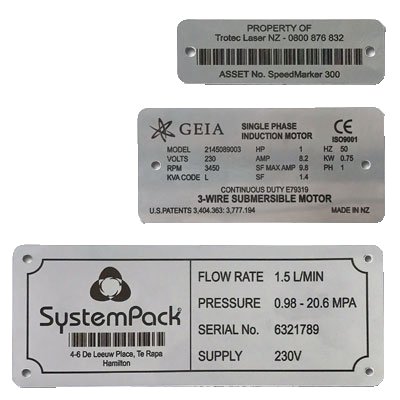
We manufacture our 316L labels in thicknesses ranging from 0.5 mm to 3.0 mm. Thin plates are suitable for light, curved surfaces. Thick plates are more resistant to impact and mechanical stress.
Choosing the right thickness directly affects both cost and lifespan. We therefore recommend sharing your usage environment with us before ordering. We'll determine the most suitable thickness together.
If you can't decide which grade is right for your application, simply tell us your environmental conditions — our technical team will recommend the most suitable and economical material for you.